
Wall and Ceiling Leak Detection Miami, FL
A brown ring spreading across the ceiling, paint that bubbles near the baseboard, or drywall that feels soft to the touch usually means water is getting somewhere it shouldn’t. Leak Detection Miami FL helps Miami-Dade homeowners, condo owners, landlords and property managers connect with independent local professionals who work to find the source before walls or ceilings are opened.
Wall and ceiling leak detection Miami testing identifies where water is coming from behind a damaged surface: a supply line, a drain, a fixture connection, an air conditioning drain, a unit above, or rainwater entering the building. Finding the true source first keeps any opening small and sends the repair to the right trade.
Leak Detection Miami FL is a leak detection referral service. When you contact us, we connect you with an independent, local leak detection provider who performs the inspection.
Why Isn’t the Leak Always Behind the Stain?
The stain on a wall or ceiling shows where water ended up, not necessarily where it started. Water follows gravity and the path of least resistance, so it can travel along pipes, framing, ceiling joists and the backs of drywall before it soaks through somewhere visible. The EPA’s guide to leak detection devices explains how monitoring tools can flag unusual water flow before damage spreads.
Ceiling leak detection Miami at a glance: Water often travels along pipes, joists and drywall before it shows up as a stain, so the wet spot is rarely the source. Wall and ceiling leak detection Miami providers use moisture meters, thermal imaging and pressure tests to trace it. In condos and multi-story homes, ceiling leak detection Miami work may also need to check the unit above. Accurate wall and ceiling leak detection Miami testing means smaller openings and less drywall to replace.
That’s why a ceiling stain in a hallway can come from a bathroom a few feet away, and a damp baseboard can trace back to a fixture on the other side of the wall. In multi-story buildings, water can also move down from a unit above, or along a shared wall or a building riser. See Condo Leak Detection in Miami.
Drywall and plaster also absorb and wick moisture. By the time a stain appears, the wet area behind the surface may be larger than what you can see. Good detection maps that wet area and follows it back to the source.
What Are the Signs of a Leak in a Wall or Ceiling?
The most common signs of a leak in a wall or ceiling are water stains, bubbling or peeling paint, and drywall that feels soft or looks swollen. Musty smells and moisture that keeps coming back after it dries are also strong clues.
These signs show that water is reaching the surface. They don’t confirm where it’s coming from, whether there’s mold, or whether the damage goes deeper. That takes testing and, where needed, the right specialist.
Water stains.
Yellow or brown rings on ceilings, or streaks on walls, often grow or darken over time when the source is active.
Bubbling or peeling paint.
Water trapped behind paint pushes it away from the surface. This is common near baseboards and below bathrooms.
Soft, swollen or sagging drywall.
Wet drywall loses strength. A ceiling that bulges or sags may be holding water.
Damp or stained baseboards.
Swelling, discoloration or separation at the bottom of a wall can point to water collecting at floor level. If the floor itself is warm or damp, see Slab Leak Detection.
Musty or earthy smells.
A persistent odor in one room or closet can mean hidden moisture, especially in Miami’s humid climate.
Recurring moisture.
A spot that dries out and then returns, for example after showers or after rain, suggests an active source.
Dripping or running-water sounds.
Water moving inside a wall or ceiling, with nothing running nearby, can mean a pressurized line is leaking.
What Causes Water Leaks in Walls and Ceilings?
Most wall and ceiling leaks come from one of a few sources: pressurized supply lines, drain lines, fixture connections, air conditioning condensate drains, a unit above, or rainwater entering from outside. Each one tends to behave differently.
- Water supply lines. Pipes carrying pressurized hot or cold water to fixtures. A leak here usually runs constantly, whether or not anything is in use, and often shows up on the water meter. For the buried line outside, see Water Line Leak Detection.
- Drain lines. Pipes carrying water away from sinks, tubs, showers and toilets. Drains usually leak only when the fixture above is used, so the stain may appear or grow after showers or flushing.
- Fixture connections. Shower valves, tub spouts, overflow gaskets, toilet seals and the seal around a shower pan can all let water into walls and ceilings below.
- Air conditioning condensate. AC systems produce water as they cool, and in Miami they run much of the year. A clogged condensate drain or an overflowing drain pan near an air handler can stain ceilings and walls. This is an HVAC issue, not a plumbing leak.
- Water heaters. A water heater in a closet or attic can leak into nearby walls or ceilings.
- A unit above. In condos and apartments, water from a neighbor’s bathroom, kitchen or appliance can show up in your ceiling.
- Rainwater intrusion. Roofs, windows, sliding doors, balconies and exterior walls can let wind-driven rain inside, especially during the rainy season and tropical storms.
- Condensation. In humid weather, cold AC ducts or lines can sweat and drip, leaving stains that look like leaks.
Is It a Plumbing Leak or Rainwater?
The timing of the damage is often the best early clue. Damage that appears or grows after rain points toward rainwater entering the building. Damage that is there regardless of weather, or that changes after a fixture is used, points toward plumbing. A water meter that moves with all water off points toward a leaking supply line.
| What you notice | What it can suggest |
|---|---|
| Stain grows after heavy rain or storms | Roof, window, door, balcony or exterior wall intrusion |
| Stain is damp all the time, rain or not | Pressurized supply line, or a constant source above |
| Stain gets worse after showers, baths or flushing | Drain line, fixture connection or shower pan |
| Stain is near or below the AC air handler | Condensate drain or drain pan overflow |
| Water meter moves with all water off | Leaking supply line somewhere in the building |
| Stain in a condo ceiling, with a unit above | Plumbing, fixture or appliance in the unit above, or a shared line |
These patterns point you in a direction. They don’t confirm the source on their own. Some situations have more than one cause, such as an old rain stain and a new plumbing leak in the same area.
Not sure whether a supply line is involved? Check your water meter for a leak.
What Should I Do When I Find a Wet Wall or Ceiling?
Start by keeping people safe, then limit the damage and gather clues about the source. These steps are safe for most homeowners and property managers:
- STEP 1
Check for electrical risk first.
If water is near light fixtures, ceiling fans, outlets or switches, don’t touch them or any wet electrical equipment. Keep away from the area, and contact a licensed electrician or emergency services if electricity and water are in contact.
- STEP 2
Keep clear of a sagging ceiling.
A ceiling that bulges or sags may be holding water and could give way. Keep people and pets out from under it, move belongings away, and get qualified help.
- STEP 3
Stop using fixtures above the area.
If the damage is below a bathroom or kitchen, pause showers, baths and toilets there until the source is found.
- STEP 4
Shut off water if a leak is active.
If water is actively dripping or spreading, close the main shutoff valve if you can do it safely. If the stain is near the air handler, turn the AC off at the thermostat and call an HVAC technician.
- STEP 5
Note the timing.
Write down when you first saw the damage and whether it changes after rain, after fixtures are used, or not at all.
- STEP 6
Check the water meter.
With all water off, see whether the meter moves. That tells the specialist whether a supply line may be involved.
- STEP 7
Photograph and mark the edges.
Take photos, and lightly mark the edge of the stain with a pencil and the date. If it spreads, you’ll see it clearly.
- STEP 8
In a condo, notify the building.
Let building management or the association know, and if appropriate, ask the unit above to check for visible leaks.
How Does Wall and Ceiling Leak Detection Miami Testing Work?
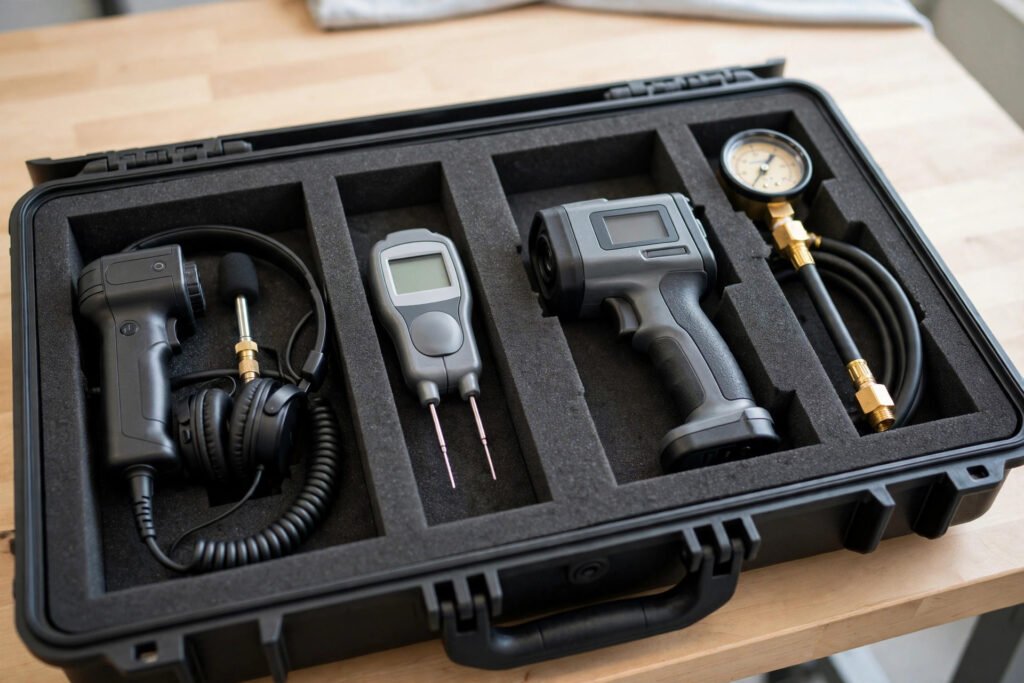
Wall and ceiling leak detection Miami professionals find leaks by mapping where the moisture is, working out which water source could reach that area, and then testing those sources one at a time. The methods depend on whether the suspected source is a supply line, a drain, a fixture, the AC system or the building exterior.
- 01
Review the Damage and History.
The specialist looks at the stain pattern, asks when it appeared and what makes it change, and notes what sits above or beside the area: bathrooms, kitchens, the air handler, a water heater, exterior walls or a unit above.
- 02
Map the Moisture.
Moisture meters show how far the wet area extends behind the surface. Thermal imaging can help, too: wet drywall often shows as a cooler area, and a leaking hot water line can show as a warm one. Mapping often reveals that the wet zone is larger than the visible stain.
- 03
Test the Likely Sources.
Depending on what the mapping suggests, this may include:
- Pressure testing and isolation of supply lines, along with a meter check, to see whether a pressurized line is losing water
- Acoustic equipment to listen for water escaping a pressurized pipe inside a wall or ceiling
- Fixture or flood testing, running a shower, tub or drain in a controlled way to see whether the stain responds
- Dye testing of fixtures or drains in some situations
- 04
Confirm the Location.
When the evidence points to a spot, the specialist confirms it as closely as possible. Sometimes a small inspection opening, or a camera through a small hole, is needed to verify what’s inside.
- 05
Explain the Findings.
You learn the likely source, its location, and which trade should handle the repair. Ask whether written findings or photos are available.
Why Find the Source Before Opening a Wall or Ceiling?
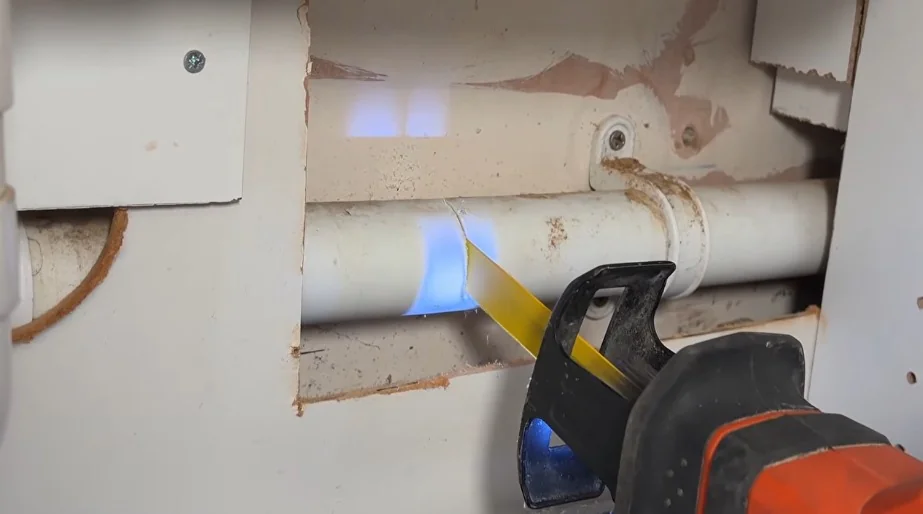
Finding the source before opening a wall or ceiling keeps the opening small and in the right place. Without detection, drywall often gets cut where the stain is, only to find the water came from somewhere else, which means more openings, more patching and more painting.
It also sends the problem to the right person. A ceiling stain caused by an AC condensate line needs an HVAC technician, not a plumber. Rainwater through a window needs a different contractor than a leaking drain. Knowing the source first avoids paying the wrong trade to look for it.
Finally, clear findings help when other people are involved, such as a condo association, a neighbor, a landlord, a tenant or an insurance company. Policies and responsibilities vary, so confirm what applies to your situation.
Who Fixes the Leak Once It’s Found?
The right professional depends on the source. Leak detection identifies where the water is coming from. The repair then goes to the trade that handles that system.
A licensed plumber
for supply lines, drain lines, fixture connections, shower valves and water heaters.
A roofer
when water enters through the roof.
A window, door or exterior contractor
for leaks around windows, sliding doors, balconies or exterior walls.
An HVAC technician
for condensate drains, drain pans and sweating ducts or lines.
Building management or the association
when the source is in another unit or a shared building system.
A water damage or mold professional
when materials are heavily saturated or there are concerns about mold. Only a qualified professional can assess mold.
Is Leak Detection the Same as Repair?
No. Leak detection finds where the water is coming from. Repair fixes the source, and then the damaged wall or ceiling is restored. Some ceiling leak detection Miami providers also handle plumbing repairs, while others locate the leak and leave the repair to a professional you choose. Ask before booking which you’re getting.
Questions to ask after the source is found:
- What is the source, and how confident are you in that finding?
- How far does the moisture extend behind the surface?
- Which trade should handle the repair?
- Does the wall or ceiling need to dry before it’s closed up?
- Can I get the findings in writing, with photos?
What Affects Wall and Ceiling Leak Detection Miami Costs?
The cost of wall and ceiling leak detection Miami homeowners pay depends mainly on how many possible sources need to be tested and how easy the area is to reach. A stain directly below a single bathroom is usually simpler than an intermittent stain in a condo with a unit above, an air handler nearby and an exterior wall.
Pricing varies by provider and situation. Before booking, ask what the detection fee includes and whether any part applies toward a repair.
Factors that affect price:
Number of possible sources.
Plumbing, AC, rainwater and a unit above may all need to be ruled in or out.
Leak behavior.
Constant leaks are usually easier to trace than leaks that only happen after rain or when a fixture is used.
Access.
High ceilings, finished surfaces and occupied units can take more time.
Property type.
Condos may need building coordination and access to other units.
Methods required.
Moisture mapping alone may be enough, or the job may need pressure, fixture or dye testing.
Documentation.
Written findings with photos may be included or priced separately.
How Does Leak Detection Miami FL Help?
Leak Detection Miami FL is a referral service. You tell us what you’re seeing, such as a ceiling stain or a damp wall, and we connect you with an independent, local leak detection provider in Miami-Dade who performs the inspection. The provider, not Leak Detection Miami FL, carries out the testing and any repair work.
Before work begins, it’s reasonable to ask the provider:
- Whether they hold an active Florida license for the work. You can look up licenses through the Florida Department of Business and Professional Regulation (DBPR).
- Which sources they’ll test, and which methods they’ll use.
- What the detection fee includes, and whether findings come in writing.
- Whether they also handle repairs, or will refer you to the right trade.
Where Is Wall and Ceiling Leak Detection Miami Service Available?
Leak Detection Miami FL helps property owners find wall and ceiling leak detection Miami property owners trust in Miami, Miami Beach, Miami Springs, Miami Lakes, North Miami and Miami Shores.
The likely sources vary by property. In Miami Beach and North Miami condos, stacked units and shared walls make the unit above a common suspect. In single-family homes across Miami Springs, Miami Lakes and Miami Shores, bathrooms, water heaters, air handlers and roofs are the usual places to start.
If your neighborhood isn’t listed, contact us to check availability.
Leak Detection in Miami
Serving Miami-Dade County
Wall and Ceiling Leak Detection Miami FAQs
Why is the water stain not directly under the leak?
Water travels along pipes, framing and ceiling joists before it soaks through drywall, so the stain shows where water ended up, not where it started. Moisture mapping helps trace it back to the source.
Can a leak be found without cutting into the wall or ceiling?
Often the source can be narrowed down from the surface using moisture meters, thermal imaging, acoustic equipment and fixture testing. Sometimes a small inspection opening is needed to confirm what’s inside, and the repair itself usually requires opening the area. Detection keeps any opening small and in the right place.
How do I know if it’s a plumbing leak or a roof leak?
Timing is the best early clue. Damage that appears after rain points toward the roof, windows or exterior walls. Damage that stays damp regardless of weather, or changes after fixtures are used, points toward plumbing. Professional testing confirms the source.
Why does the stain only show up after I shower?
A stain that appears or grows after showers often points to a drain line, a shower valve, a tub or overflow seal, or the shower pan, rather than a pressurized supply line. Testing the shower and its drain in a controlled way can help confirm it.
Can my air conditioner cause a ceiling leak?
Yes. AC systems produce condensation, and a clogged condensate drain or an overflowing drain pan can stain nearby ceilings and walls. If the damage is near the air handler, turn off the AC at the thermostat and contact an HVAC technician.
My condo ceiling is leaking from the unit above. What should I do?
Notify building management or the association, and let the upstairs owner know if appropriate. Photograph the damage and note the dates. Responsibility depends on where the source is and on your association’s documents and insurance, so confirm with the association and your insurer.
Does a ceiling stain mean I have mold?
Not necessarily. A stain shows that water reached the surface, but it doesn’t confirm mold. If materials stayed wet for a while or you notice a musty smell, have a qualified professional assess it.
I fixed a leak, but the stain is still there. Is it still leaking?
Not always. Old stains remain after a leak stops. Mark the stain’s edges with a pencil and the date. If it spreads or stays damp, the source may still be active, and moisture testing can confirm it.
Seeing Stains or Damp Spots on Your Walls or Ceiling?
If you have water stains, bubbling paint, soft drywall or a musty smell you can’t explain, leak detection can show where the water is coming from before anyone starts cutting. Contact Leak Detection Miami FL to connect with a local leak detection professional in Miami-Dade.
Related Leak Detection Resources
Leak Detection Services
Areas We Serve

A Miami-Dade referral service connecting homeowners, condo owners and property managers with independent local leak detection providers.
Call us today(645) 465-5599Call NowServices
Leak Detection Miami FL is a referral service and does not perform inspections or repairs. Services are provided by independent local providers.
© 2026 Leak Detection Miami FL. All rights reserved.