
High Water Bill Leak Detection in Miami, FL
An unexpectedly high water bill doesn’t always mean a leak, but it’s one of the most common ways people first discover one. Leak Detection Miami FL helps Miami-Dade homeowners, condo owners, landlords and property managers rule out the simple causes and connect with independent local professionals who can find a hidden leak if there is one.
High water bill leak detection Miami testing starts by confirming whether water is actually escaping from your plumbing, then narrows down where: under the slab, inside a wall, in an underground service line or in an irrigation system. Knowing the cause helps you fix the right problem, and it can matter if you ask your water utility to review the bill.
Leak Detection Miami FL is a leak detection referral service. When you contact us, we connect you with an independent, local leak detection provider who performs the inspection.
Why Is My Water Bill So High?
A water bill usually jumps for one of three reasons: you used more water than usual, the bill covers a longer period or a different rate, or water is escaping through a leak. Before assuming a hidden pipe leak, it’s worth checking the first two, because they’re common and easy to confirm. If you notice an unexplained increase in your water bill, review the Miami-Dade Water and Sewer Department’s water bill adjustments and credits page to understand possible causes and available account services.
High water bill leak detection Miami at a glance: A bill that jumps with no change in use is often the first sign of a hidden leak. High water bill leak detection Miami homeowners need usually starts with a meter test, then checks toilets, irrigation and the service line. When those are clear, high water bill leak detection Miami providers move to acoustic and pressure testing to find leaks under slabs or inside walls. Good high water bill leak detection Miami work ends with a clear location, so repairs stay small.
Look at the bill itself first:
- Compare gallons, not dollars. Your bill should show how much water was used. A higher dollar amount with similar usage points to a rate change or extra charges, not a leak.
- Check the dates. A billing period that covers more days than usual will naturally show more usage.
- Look for the word “estimated.” If the reading was estimated rather than read from the meter, the next actual reading may include a catch-up. Ask your water utility if you’re not sure.
Then think about what changed at home:
- More people in the house, guests staying over, or family home for the summer
- Seasonal residents returning, or a property that sat empty and is now occupied
- Filling or topping off a pool, especially in hot, dry weather
- Irrigation running longer, more often or with a broken head or stuck valve
- A new appliance, a water softener, or landscaping that needed extra watering
If none of these explain the change, a leak becomes much more likely. A meter that moves when nothing is using water is the clearest sign.
What Are the Signs That a Leak Is Causing a High Water Bill?
The strongest sign that a leak is behind a high bill is a water meter that keeps moving while no water is being used anywhere on the property. Other signs include running-water sounds with every fixture off, damp areas with no clear source, and warm spots on the floor.
Here is what each sign can suggest:
One sign alone doesn’t prove a leak. A moving meter combined with any of the others is strong reason to have the property checked.
The meter moves with all water off.
Water is leaving the system somewhere, inside the building or underground.
Running water sounds with nothing on.
Water moving inside walls, under the floor or near the meter often means a pressurized line is leaking.
A warm spot on a tile or concrete floor.
This can point to a hot water line leaking under the slab.
Damp drywall, stains, bubbling paint or musty smells.
These usually mean water is reaching that surface from a nearby line, fixture or the unit above.
A wet or unusually green patch in the yard.
In dry weather, this can point to an underground service line or irrigation leak.
A water heater that seems to run constantly.
Hot water escaping somewhere makes the heater work harder.
A pool that needs frequent refilling.
Water loss beyond normal evaporation can mean the pool, or its auto-fill, is part of the problem.
Check Toilets and Visible Plumbing First
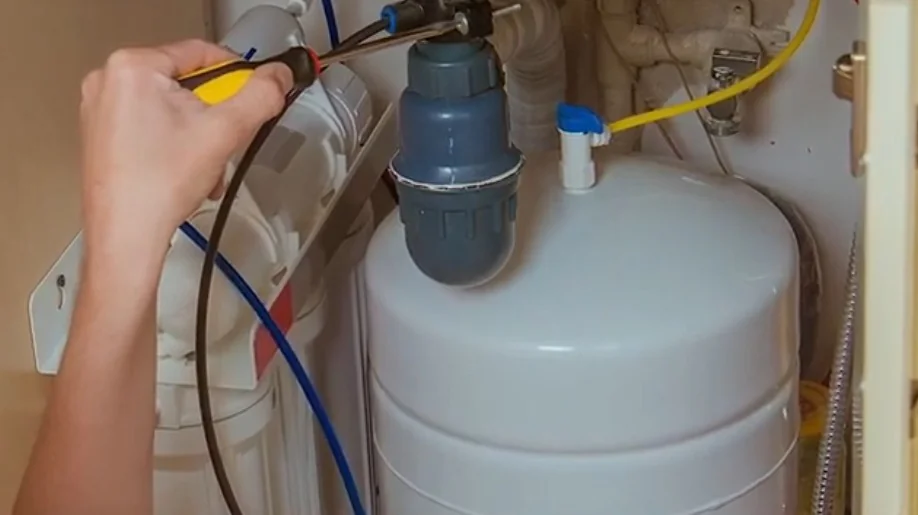
Running toilets are one of the most common causes of a high water bill, so check them before assuming there’s a hidden pipe leak. A toilet with a worn flapper or a faulty fill valve can run silently and waste a large amount of water.
A simple toilet dye test:
- Remove the tank lid and add a few drops of food coloring to the tank water.
- Don’t flush. Wait about 15 to 20 minutes.
- If color appears in the bowl, water is leaking from the tank, usually past the flapper.
- Repeat the test for each toilet in the home.
Also look at the plumbing you can see:
- Dripping faucets, showerheads and tub spouts
- Supply lines and shutoff valves under sinks and behind toilets
- The water heater, including its relief valve and discharge pipe
- Washing machine hoses and the ice maker line behind the refrigerator
- Outdoor hose bibs, and the irrigation controller’s schedule
Fixing a visible leak is usually simpler than finding a hidden one. If everything you can see checks out and the meter still moves, the leak is likely somewhere you can’t see.
How Do I Check My Water Meter for a Leak?
You can do a basic meter check by turning off every water use on the property, then watching the meter for movement. If the meter moves when nothing should be using water, water is escaping somewhere. Closing the main shutoff valve to the building can then help tell you whether the leak is likely inside or outside.
- STEP 1
Stop all water use.
Turn off faucets and showers, and make sure toilets aren’t refilling. Pause the dishwasher, washing machine, ice maker, water softener, irrigation system and any pool auto-fill.
- STEP 2
Find the meter and look at it.
Meters are often in an in-ground box near the street or sidewalk. Lift the lid with care, since meter boxes can hold insects or standing water. Don’t tamper with the meter.
- STEP 3
Watch for movement.
Many meters have a small low-flow indicator, such as a triangle, star or small dial, that turns even with small leaks. Digital meters may show flow on the display. Watch for several minutes, or write down the reading and check it again after an hour or two with no water used.
- STEP 4
Close the main shutoff valve to the building,
if you can do it easily. Check the meter again. If it stops, the leak is likely inside. If it keeps moving, the leak may be underground between the meter and the building, or on an irrigation line connected before the house valve. Don’t force a stuck valve.
- STEP 5
Reopen the valve and note what you saw.
Take a photo of the meter readings to share with your high water bill leak detection Miami provider.
When this check may not work as expected:
- Condos and apartments. Many units share a building meter, so you may not be able to test your unit on its own. Building management or the association may need to be involved.
- Irrigation and pool fill. If these are connected before the house shutoff, they can keep the meter moving even with the house closed off.
- Appliances that use water on a timer. Water softeners, ice makers and irrigation timers can start mid-test and give a false result.
- Meter types vary. If you can’t read your meter or aren’t sure what you’re seeing, your water utility can explain it.
When Should I Call for High Water Bill Leak Detection Miami Help?
Professional leak detection makes sense when your bill is higher than your usage explains and the meter moves with all water off, especially after you’ve checked toilets and visible plumbing. It’s also worth calling if you notice damp areas, warm floors or running-water sounds, even if the bill hasn’t changed much yet.
Common situations where a professional check helps:
- The meter moves with everything off, and you can’t find the cause.
- You fixed a running toilet or faucet, but the bill or meter hasn’t improved.
- The bill has stayed high for more than one billing period.
- Your water utility flagged unusually high usage.
- You plan to ask the utility to review your bill and want the cause confirmed and documented.
- You own a rental or manage a building and need clear findings to act on.
How Does High Water Bill Leak Detection Miami Testing Work?
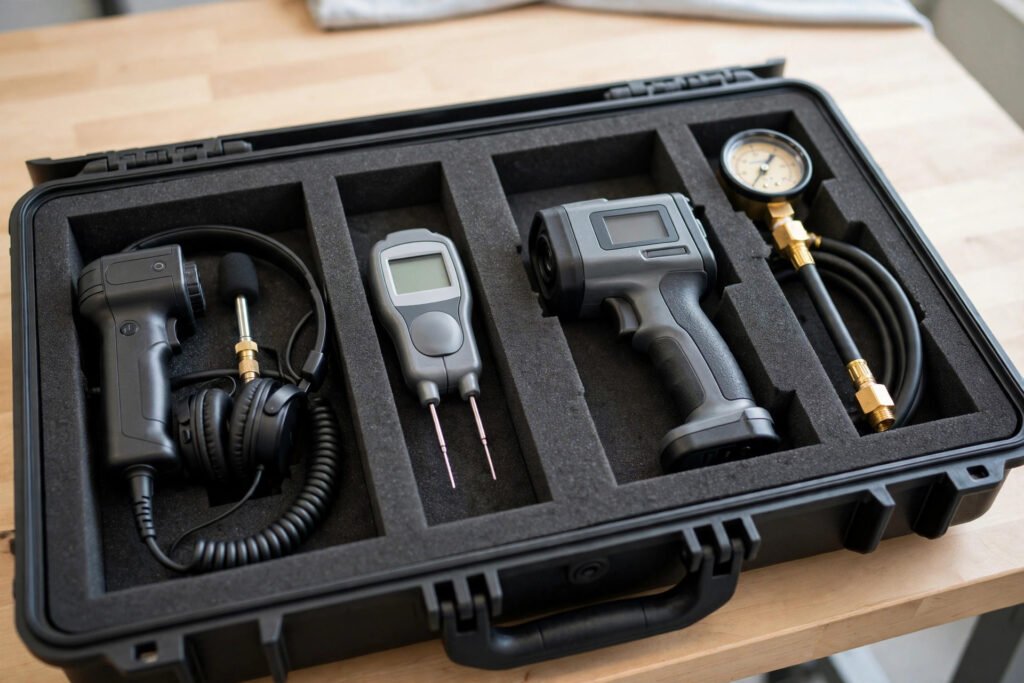
Professionals find a hidden leak by confirming water loss at the meter, isolating which part of the plumbing is losing water, and then using diagnostic equipment to narrow down the location. The methods depend on where the leak appears to be and what kind of pipe is involved.
- 01
Review the Bill and Symptoms.
The specialist looks at the usage change, the billing period and any symptoms you’ve noticed, and asks about irrigation, pools and recent plumbing work.
- 02
Confirm the Water Loss.
A meter check or pressure test shows whether water is actually escaping from the system. This step can rule out usage changes and billing issues.
- 03
Isolate the Leaking Section.
By closing valves and testing parts of the system separately, such as the house versus the service line, or hot versus cold lines, the specialist narrows the search to one area.
- 04
Locate the Leak.
Depending on what the testing shows, this may involve:
- Acoustic equipment that listens for water escaping a pressurized pipe through floors, walls or soil
- Thermal imaging to spot temperature differences from hot water leaks
- Moisture meters to find dampness in walls, floors and ceilings
- Line locating to trace the route of buried pipes
- Tracer gas in some cases where sound doesn’t carry well
- 05
Explain the Findings.
You learn which line or fixture appears to be leaking, where, and what the provider recommends. Ask whether written findings or photos are available, since these can help with repairs and with a bill review request.
Where Are Hidden Leaks Usually Found?
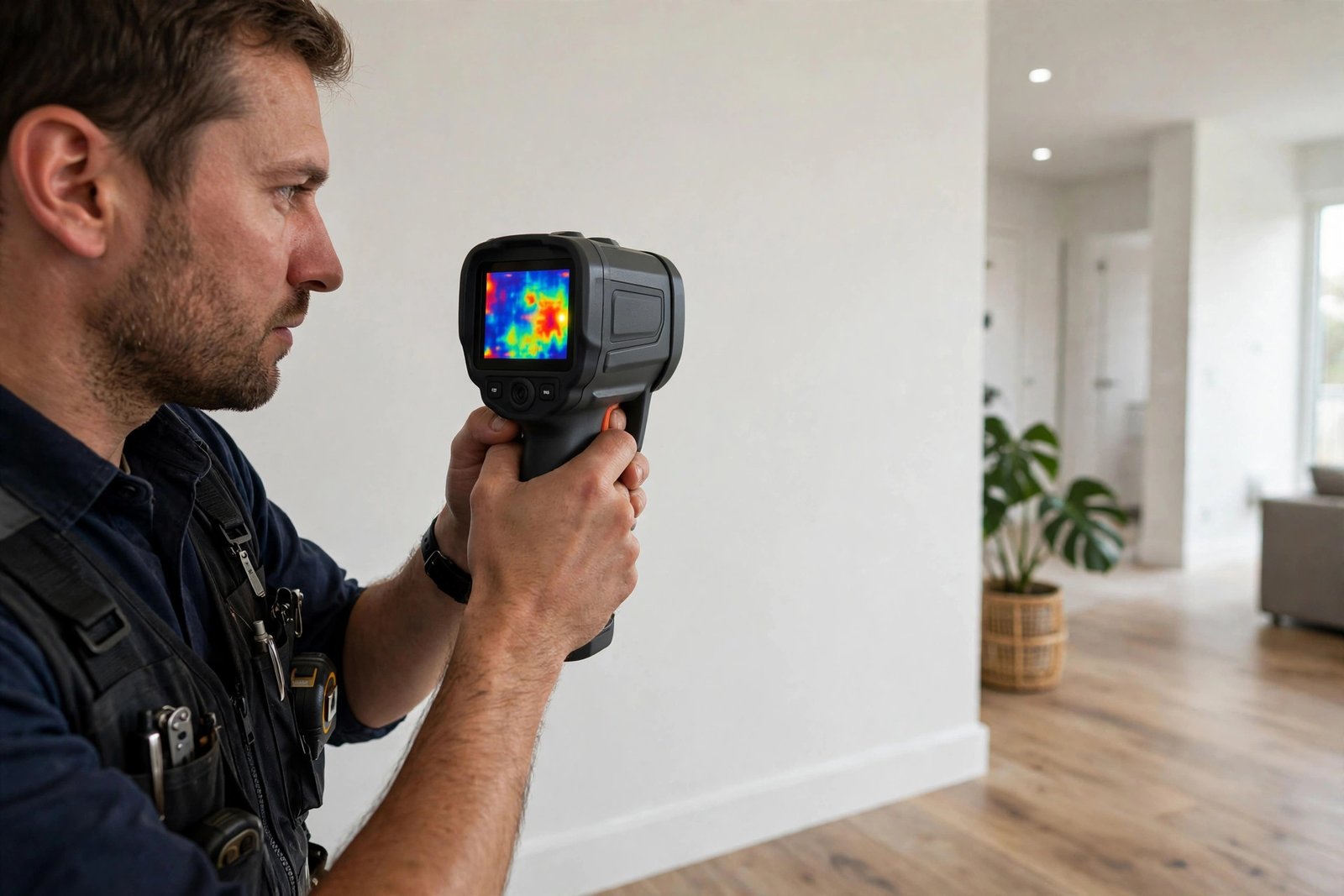
Hidden leaks behind a high water bill are most often found in one of five places: under the slab, inside walls or ceilings, in the underground service line, in the irrigation system, or in pool equipment and plumbing. Each one tends to leave different clues.
| Leak location | Common clues |
|---|---|
| Under the slab | Warm floor spots, damp flooring, running-water sounds, meter moving with fixtures off |
| Walls and ceilings | Stains, bubbling paint, soft drywall, musty smells, or water from a unit above |
| Underground service line | Wet or green yard patches, soft ground, meter moving with the house valve closed |
| Irrigation system | Soggy zones, water near sprinkler heads or valves, meter moving when irrigation is on its schedule |
| Pool and pool fill | Frequent refilling, auto-fill running constantly, damp areas near equipment |
Can Miami-Dade Water and Sewer Adjust a High Bill Caused by a Leak?
Miami-Dade Water and Sewer Department (WASD) has a leak adjustment process for some high bills caused by leaks, but it has requirements, and an adjustment isn’t guaranteed. Check the current rules directly with WASD before you rely on it.
Based on WASD’s published information at the time of our research, the process generally:
- applies to qualifying leaks, such as underground or hidden leaks, after the leak has been repaired
- requires the request to be made within a set time after the high usage notice or bill
- asks for proof of repair, such as a plumber’s invoice and photos taken before and after the repair
WASD has also described a high-bill investigation when usage rises well above a customer’s normal average.
Who is responsible for what: WASD states that it is responsible for the water system up to and including the meter box, and that the property owner is responsible for plumbing beyond that point. Some cities in Miami-Dade operate their own water utility or billing, so check your bill to see who your provider is and ask about their rules.
Practical tips if you plan to request a review:
- Act quickly once you notice the high bill, since deadlines can apply.
- Photograph the meter, the leak, the repair area and your bills.
- Keep every invoice, from leak detection through repair.
- Ask your high water bill leak detection Miami provider for written findings if they offer them.
What Affects High Water Bill Leak Detection Miami Costs?
The cost of high water bill leak detection Miami homeowners pay depends mainly on how much testing it takes to find where the water is going. If the meter test quickly points to one area, the visit can be more focused. If several systems need to be ruled out, it takes longer.
Pricing varies by provider and situation. Before booking, ask what the detection fee includes and whether any part applies toward a repair.
Factors that affect price:
How many systems need testing.
Indoor plumbing, the service line, irrigation and a pool each add scope.
Where the leak is.
Under a slab, deep underground or inside finished walls takes more work to locate.
Property type and size.
A large home, a condo needing building coordination, or a multi-unit property adds time.
Leak size and behavior.
Small or intermittent leaks can take longer to pinpoint.
Methods required.
Some leaks are found with acoustic equipment alone. Others need thermal imaging, line locating or tracer gas.
Documentation.
Written findings with photos, useful for a bill review, may be included or priced separately.
Is Finding a Leak the Same as Fixing It?
No. Leak detection finds where water is escaping. Leak repair fixes it. Some high water bill leak detection Miami providers also offer repairs, while others locate the leak and leave the repair to a plumber you choose. Ask before booking which you’re getting.
For a high water bill, both steps matter. The bill usually won’t come down until the leak is repaired, and a utility bill review generally needs proof that the repair was done.
Questions to ask after a leak is found:
- Where is the leak, and how confident are you in the location?
- Is it the main cause of the high usage, or could there be more than one leak?
- What repair options make sense, and what do they involve?
- Can I get the findings in writing, with photos?
- Do you handle repairs, or will I need a separate plumber?
How Does Leak Detection Miami FL Help?
Leak Detection Miami FL is a referral service. You tell us what you’re seeing, such as a high bill or a moving meter, and we connect you with an independent, local high water bill leak detection Miami provider who performs the inspection. The provider, not Leak Detection Miami FL, carries out the testing and any repair work.
Before work begins, it’s reasonable to ask the provider:
- Whether they hold an active Florida license for the work. You can look up licenses through the Florida Department of Business and Professional Regulation (DBPR).
- Which systems they’ll test and which methods they’ll use.
- What the detection fee includes, and whether findings come in writing.
- Whether they also handle repairs.
Where Is High Water Bill Leak Detection Miami Service Available?
Leak Detection Miami FL helps property owners find high water bill leak detection Miami property owners trust in Miami, Miami Beach, Miami Springs, Miami Lakes, North Miami and Miami Shores.
The likely causes vary by property. Single-family homes with lawns and pools, common in areas such as Miami Lakes and Miami Shores, have more outdoor lines to rule out. Condo owners in Miami Beach and North Miami may share a building meter, which makes coordination with management part of the process.
If your neighborhood isn’t listed, contact us to check availability.
Leak Detection in Miami
Serving Miami-Dade County
High Water Bill Leak Detection Miami FAQs
Does a high water bill always mean I have a leak?
No. A higher bill can come from more water use, a longer billing period, a rate change or an estimated meter reading. Compare the gallons used, not just the dollar amount, and check the billing dates. If usage is up and nothing explains it, check for a leak.
How can I tell if I have a leak without calling anyone?
Turn off all water use and watch your meter. If it moves, water is escaping somewhere. Check toilets with a dye test and look at visible plumbing. If the meter still moves after that, a hidden leak is likely and professional detection is the next step.
Why is my meter moving when all my water is off?
Water is leaving the system somewhere. Common causes include a running toilet, a leaking supply line inside a wall or under the slab, an underground service line leak, or an irrigation or pool fill line. Closing the main house valve helps show whether it’s inside or outside.
Can a running toilet really raise my bill that much?
Yes. A toilet that runs constantly or leaks past the flapper can waste a significant amount of water without being obvious. It’s one of the first things to check when a bill jumps.
Will Miami-Dade Water and Sewer lower my bill if I had a leak?
Possibly, but it isn’t guaranteed. WASD has a leak adjustment process for qualifying leaks that generally requires the leak to be repaired and proof of the repair. Rules and deadlines can change, so check with WASD or your water utility directly and act soon after noticing the high bill.
What if my condo doesn’t have its own meter?
Many condo units share a building meter, so a unit-level meter test may not be possible. Look for signs in your unit, such as running toilets, damp areas and stains, and contact building management. Condo leak detection often needs the association’s involvement.
What if leak detection doesn’t find a leak?
Ask what was tested and what was ruled out. If no leak is found, the high bill may come from usage, irrigation, a meter reading issue or a leak that only happens at certain times. You can also ask your water utility to review the meter and the reading.
Should I fix the leak before contacting the water utility?
Generally, the leak needs to be repaired before a utility will consider an adjustment, and proof of repair is usually required. Document the leak and repair with photos and invoices, and confirm the current process with your utility.
Think a Hidden Leak Is Behind Your High Water Bill?
If your bill is higher than your usage explains and the meter keeps moving with everything off, leak detection can show where the water is going before you spend money on the wrong repair. Contact Leak Detection Miami FL to connect with a local leak detection professional in Miami-Dade.
Related Leak Detection Resources
Leak Detection Services
Areas We Serve

A Miami-Dade referral service connecting homeowners, condo owners and property managers with independent local leak detection providers.
Call us today(645) 465-5599Call NowServices
Leak Detection Miami FL is a referral service and does not perform inspections or repairs. Services are provided by independent local providers.
© 2026 Leak Detection Miami FL. All rights reserved.