
Water Line Leak Detection in Miami, FL
A soggy patch in the yard that never dries, a water bill that jumps for no reason, or a meter that keeps turning with every tap closed can all point to a leak in your underground water line. Leak Detection Miami FL connects Miami-Dade homeowners, landlords and property managers with independent local professionals who work to locate water line leaks before anyone starts digging.
Water line leak detection Miami testing confirms whether the buried pipe carrying water from your meter to your building is leaking, then narrows down where along that pipe the leak is most likely to be. A located leak means a smaller, targeted excavation instead of trenching across the yard to find it.
Leak Detection Miami FL is a leak detection referral service. When you contact us, we connect you with an independent, local leak detection provider who performs the inspection.
What Is an Underground Water Line Leak?
An underground water line leak is a leak in the buried pipe that carries water from your water meter to your home or building, often called the water service line or main water line. Because the pipe runs under soil, lawn, pavers or concrete, the leak usually stays hidden until it shows up on the bill, at the meter or as a wet spot outside. Miami-Dade Water and Sewer explains how to use your meter to check for leaks in its leak detection tips.
Water line leak detection Miami at a glance: Most homes here have a buried service line running from the meter to the house, often under lawns, driveways or tree roots. Water line leak detection Miami property owners need usually starts with a meter test, then line tracing and acoustic listening along the route. Accurate water line leak detection Miami providers can mark the spot so any digging stays small.
On a typical property, the service line starts at the meter, which is usually in an in-ground box near the street or sidewalk, and runs underground to the point where water enters the building. A leak can develop anywhere along that path, including:
- at fittings and connections, where the pipe joins the meter side or the house side
- along the length of the pipe, from age, corrosion, shifting soil or damage
- where the line passes under a driveway, walkway or slab
- where tree roots or earlier digging have stressed the pipe
Many properties also have other buried water lines, such as irrigation lines or a supply line to a pool’s auto-fill. These can leak too, and part of good detection is figuring out which line is actually losing water.
How this differs from a slab leak: a service line leak is outside the home, between the meter and the building. A slab leak is on plumbing under the home’s foundation. Both are hidden, but they’re tested and repaired differently. See Slab Leak Detection in Miami.
What Are the Signs of a Water Line Leak?
The clearest sign of a possible water line leak is a water meter that keeps moving after you close the main shutoff valve to the house. If water is still passing through the meter when the house is shut off, it may be escaping somewhere between the meter and the building. Other common signs include a wet or unusually green patch in the yard and an unexplained jump in your water bill.
Here is what each sign can suggest:
No single sign proves a service line leak. In Miami, a wet yard can also come from heavy rain, poor drainage or a high water table after storms, and green patches can come from irrigation overspray. A wet area that persists in dry weather, together with meter movement, is much stronger evidence.
A higher water bill with no change in use.
A leak on a pressurized line runs around the clock, so even a modest leak shows up over a billing cycle.
The meter moving when all water is off.
This confirms water is leaving the system somewhere. Closing the house valve helps tell you whether it’s outside or inside.
A wet, soggy or unusually green patch of lawn.
A spot that stays wet in dry weather, or grass that grows noticeably greener along a line, can point to water coming up from below.
Soft or sinking ground, or shifting pavers.
Water moving through the soil can wash out or soften the base under lawns, walkways and paver driveways.
Water seeping near the meter box or along a walkway.
Persistent water in or around the meter box, or a damp line across a sidewalk, is worth reporting.
Lower water pressure throughout the house.
A larger service line leak can reduce pressure at every fixture, not just one, although pressure problems have other causes too.
The sound of rushing or hissing water outside.
Some service line leaks can be heard near the meter or where the line enters the house.
Is It the Water Line, an Indoor Leak or Something Else?
You can often tell whether a leak is likely outside or inside by watching the meter with the main house shutoff valve open and then closed. If the meter keeps moving with the house valve closed, the leak is likely on the outdoor side, between the meter and the valve. If the meter stops once the house valve is closed, the leak is more likely inside the home.
Several other sources can keep a meter moving, so they’re worth ruling out:
- Irrigation systems. On some properties, the irrigation line connects before the house shutoff valve. A leaking zone valve or broken sprinkler line can then keep the meter moving even with the house valve closed.
- Pool auto-fill. If your pool refills automatically from the house supply, a stuck fill valve or a leaking pool can draw water continuously.
- Outdoor hose bibs and connections. A dripping spigot, a buried line to an outdoor kitchen, or a connection to a detached building can also be involved.
- Indoor fixtures. Running toilets, a leaking water heater relief valve or a dripping fixture can move the meter if the house valve is open.
- Rain and groundwater. In Miami’s rainy season, standing water and soggy lawns are often weather, not plumbing. Weather won’t move your meter, though.
These checks point you in a direction. They don’t prove where the leak is. That’s what professional testing is for.
Simple Checks You Can Do Before Calling
These preliminary checks are safe for most homeowners and give the specialist useful information. Don’t dig, open sealed utility equipment or tamper with the meter.
- STEP 1
Turn off all water use.
Make sure faucets, toilets, the dishwasher, washing machine, ice maker, irrigation and any pool auto-fill are off.
- STEP 2
Look at the meter.
Watch the dial or display for a few minutes. Many meters have a small low-flow indicator, often a triangle, star or small dial, that turns even with small leaks. Note whether anything moves. A meter box can hold insects or standing water, so lift the lid with care.
- STEP 3
Close the main shutoff valve to the house,
if you can locate it and turn it easily, then check the meter again. Write down whether it stopped or kept moving. Don’t force a stuck valve.
- STEP 4
Turn the irrigation system off at the controller.
If you know where your irrigation shutoff is, close it as well and recheck the meter.
- STEP 5
Walk the line’s likely path.
Between the meter box and where the water enters the house, look for wet spots, soft ground, sunken pavers or greener grass.
- STEP 6
Take photos.
Photograph the meter reading, any wet areas and recent bills before anything changes. These help with repairs, insurance questions and conversations with your water utility.
Then reopen the house valve, and contact a leak detection professional with what you found.
How Does Water Line Leak Detection Miami Testing Work?
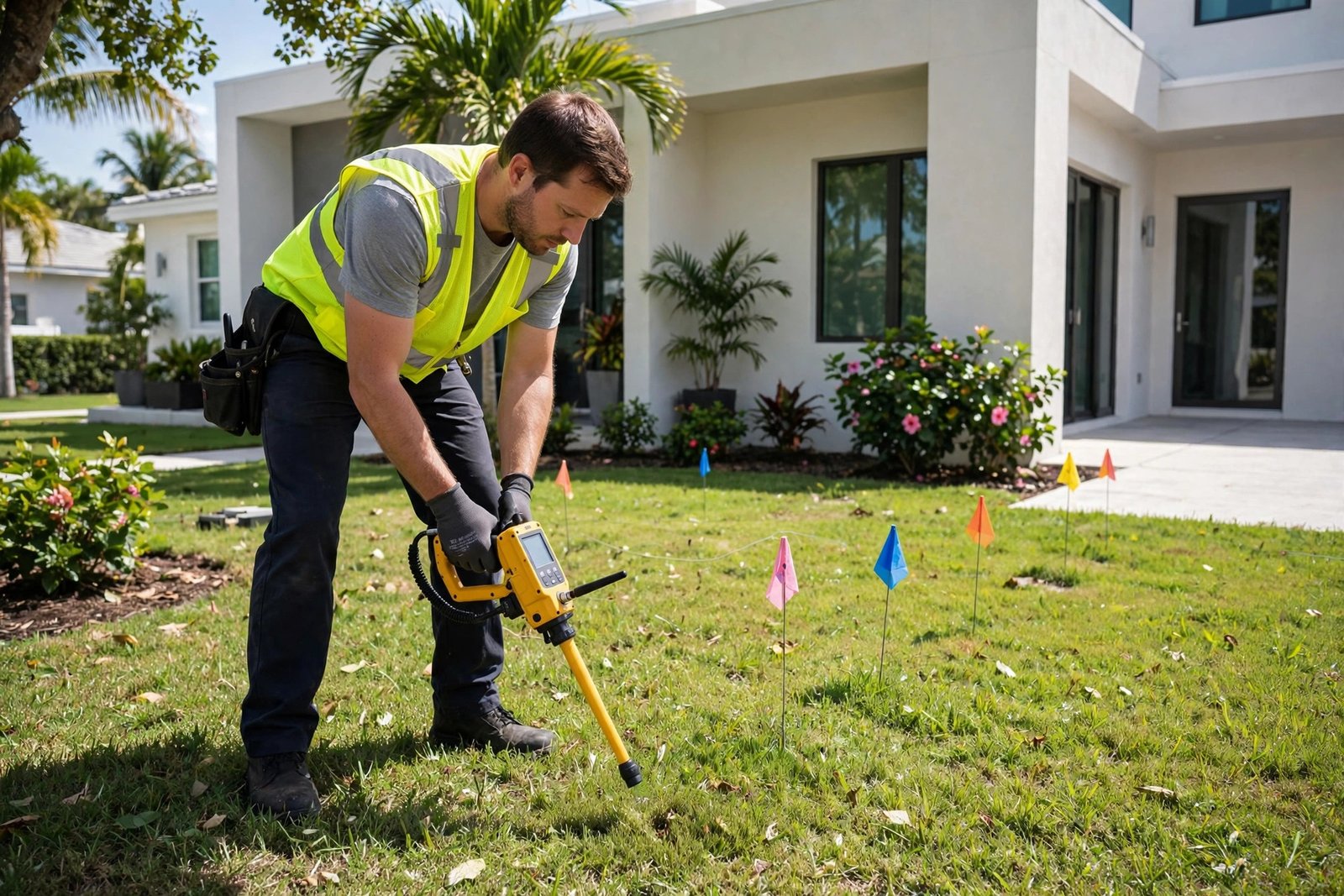
Professional water line leak detection Miami homeowners rely on confirms the leak with meter and pressure checks, isolates the service line from the rest of the plumbing, traces the line’s route, and then listens or tests along that route to narrow down the leak location. The exact methods depend on the pipe material, its depth, and what covers it.
- 01
Review the Property and Symptoms.
The specialist asks about the bill, what you saw at the meter, and any wet areas. They look at where the meter sits, where the line likely enters the building, and what’s on top of it: lawn, pavers, a driveway or landscaping.
- 02
Confirm the Leak and Isolate the Line.
Using meter checks and valve isolation, the specialist confirms that water is escaping and separates the service line from the house plumbing, irrigation and any pool fill. Pressure testing may be used to confirm whether the line is holding.
- 03
Trace the Line’s Route.
Line locating equipment helps map where the pipe actually runs, which isn’t always a straight path. Metal pipes can usually be traced directly. Plastic pipes are harder to trace and may need other techniques.
- 04
Narrow Down the Leak Location.
With the route mapped, the specialist tests along it. Depending on the line and site, this can include:
- Acoustic equipment, such as ground microphones that pick up the sound of water escaping a pressurized pipe through soil, pavers or concrete.
- Tracer gas, a safe gas introduced into the line that escapes at the leak and is detected at the surface. It can help where sound doesn’t travel well, such as on some plastic pipes.
- Moisture and surface clues, such as soil saturation, settling or a consistently wet spot, used alongside equipment readings.
- 05
Explain the Findings.
The specialist marks or describes the suspected leak location, explains how confident the finding is, and recommends next steps. Ask whether written findings or photos are available.
Why Locate the Leak Before Anyone Digs?
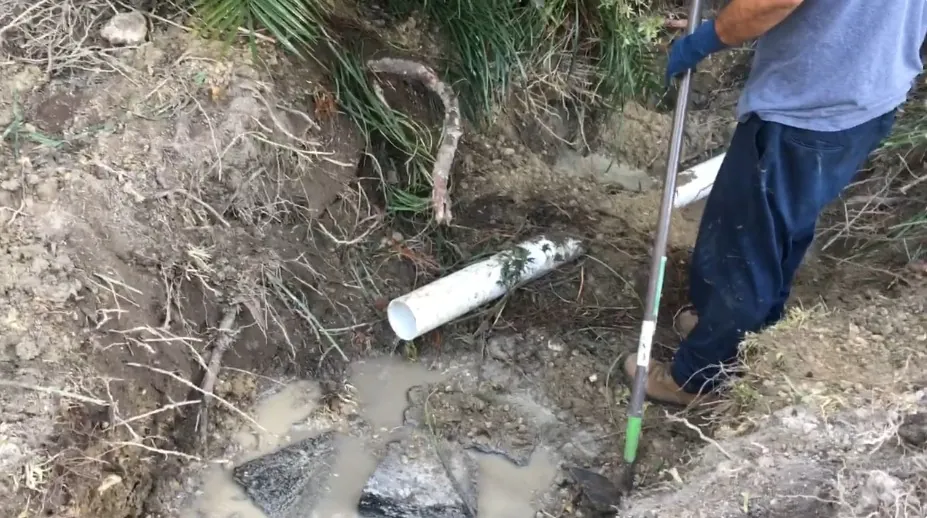
Locating a water line leak before excavation narrows where digging is needed, which can mean a smaller opening, less damage to lawns, pavers and driveways, and a faster, better-planned repair. Without detection, finding a buried leak can mean digging in several places or trenching along the whole line.
Accurate location also helps you compare repair options. Once you know where the leak is and what condition the pipe is in, you and your plumber can decide whether a spot repair makes sense or whether replacing the service line is the better long-term choice.
A safety note on digging: Florida law requires anyone excavating to contact Sunshine 811 before digging, so buried utilities such as gas, electric and communication lines can be marked. Homeowners shouldn’t dig to look for a leak themselves. The contractor handling the repair should take care of utility locates.
Water Line Leak Detection Miami vs. Repair: What Is the Difference?
Water line leak detection Miami testing finds the leak. Water line repair fixes it. Some leak detection providers also handle repairs, and others only locate the leak and leave the repair to a plumber you choose. Ask before booking which one you’re getting.
Once a service line leak is located, common repair approaches include:
- A spot repair. The area at the leak is excavated, the damaged section is repaired, and the surface is restored.
- Replacing the service line. If the pipe is aging, has leaked before or shows several weak points, replacing the line from the meter to the house may be discussed.
- Rerouting. In some cases, a new line can be run along a different path, for example to avoid digging under a driveway.
Restoring what’s on top of the line, such as sod, pavers or concrete, may or may not be included in a repair quote, so ask.
Questions to ask after a water line leak is found:
- Where exactly is the leak, and how confident are you in that location?
- What type of pipe is it, and what condition is it in?
- Does a spot repair make sense, or should the line be replaced?
- Who restores the lawn, pavers or concrete, and is that included?
- Can I get the findings in writing, with photos?
- Do you handle repairs, or will I need a separate plumber?
Who Is Responsible for the Water Line in Miami-Dade?
In general, the property owner is responsible for the water line on the customer side of the meter. Miami-Dade Water and Sewer Department states that it is responsible for the water system up to and including the meter box, and that the property owner is responsible for plumbing beyond that point.
Not every property in Miami-Dade gets water service and billing directly from WASD. Some cities operate their own water utility or billing. Check your water bill to see who your provider is, and ask them about their rules.
If you think the leak is on the utility side, at the meter or before it, contact your water utility rather than having it dug up privately.
Your water bill may also be affected. WASD has a leak adjustment process for qualifying leaks, and it generally requires proof that the leak was repaired. Requirements and deadlines can change, so check the current rules directly with your water utility.
What Affects Water Line Leak Detection Miami Costs?
The cost of water line leak detection Miami homeowners pay depends mainly on how long the line is, how hard it is to trace, and how much testing it takes to narrow down the leak. A short metal line under open lawn is usually simpler to test than a long plastic line under a paver driveway.
Pricing varies by provider and situation. Before booking, ask what the detection fee covers and whether any part applies toward a repair.
Factors that affect price:
Line length and route.
Longer runs, or lines that don’t follow a straight path, take more time to trace and test.
Pipe material.
Metal pipes are usually easier to trace and listen to than plastic ones, which may need methods such as tracer gas.
Depth and surface cover.
Deeper lines, and lines under concrete, pavers or thick landscaping, can be harder to test.
Leak size and behavior.
Small or intermittent leaks often take longer to locate.
Other systems involved.
If irrigation, a pool fill or indoor plumbing also needs to be ruled out, testing takes longer.
Documentation.
Written findings with photos may be included or priced separately.
How Does Leak Detection Miami FL Help With Water Line Leaks?
Leak Detection Miami FL is a referral service. You tell us what you’re seeing, and we connect you with an independent, local leak detection provider in Miami-Dade who performs the inspection. The provider, not Leak Detection Miami FL, carries out the testing and any repair work.
Before work begins, it’s reasonable to ask any provider:
- Whether they hold an active Florida license for the work. You can look up licenses through the Florida Department of Business and Professional Regulation (DBPR).
- How they plan to trace the line and which detection methods they’ll use.
- What the detection fee includes, and whether findings come in writing.
- Whether they also handle repairs and surface restoration.
Where Is Water Line Leak Detection Miami Service Available?
Leak Detection Miami FL helps property owners find water line leak detection Miami property owners trust in Miami, Miami Beach, Miami Springs, Miami Lakes, North Miami and Miami Shores.
Property layouts vary across these areas. Single-family homes with lawns and paver driveways are common in Miami Lakes, Miami Springs and Miami Shores, which often means a longer service line run from the street. In Miami Beach and North Miami, smaller lots, hardscaping and multi-unit buildings can make tracing and access more involved.
If your neighborhood isn’t listed, contact us to check availability.
Leak Detection in Miami
Serving Miami-Dade County
Water Line Leak Detection Miami FAQs
How do I know if my main water line is leaking?
Watch your water meter with all water off, then close the main shutoff valve to the house and check again. If the meter keeps moving with the house valve closed, water may be escaping between the meter and the house. A wet patch in dry weather or soft ground along the line’s path adds to the evidence, but professional testing confirms it.
Can a water line leak be found without digging up the yard?
The search itself is usually done from the surface, using meter checks, line locating, acoustic equipment and sometimes tracer gas. Repairing the pipe generally requires excavating at the located spot. Detection keeps that excavation as small and targeted as possible, though no method can guarantee an exact point on every line.
Why is my yard wet when it hasn’t rained?
A wet spot that stays wet in dry weather can come from a leaking water service line, an irrigation line or valve, or a pool fill line. Check whether your meter moves with all water off. If it does, a buried supply line is a likely suspect.
Could my irrigation system be causing the meter to move?
Yes. On some properties, the irrigation line connects before the house shutoff valve, so a leaking zone valve or broken line can keep the meter moving even with the house shut off. Turning the irrigation system off and rechecking the meter helps rule it in or out.
Who pays for a water line leak between the meter and the house?
In general, the property owner is responsible for the line on the customer side of the meter. Miami-Dade Water and Sewer Department states it is responsible up to and including the meter box. If you’re served by a different municipal utility, confirm their rules. If the leak appears to be at the meter or on the utility side, contact your water utility.
Does homeowners insurance cover underground water line leaks?
It depends on your policy. Some policies limit or exclude underground service line repairs, while some insurers offer optional service line coverage. Review your policy and talk with your insurer or agent before repairs begin.
Can I get a water bill adjustment for a water line leak?
Possibly. WASD has a leak adjustment process for qualifying leaks, and it generally requires proof that the leak was repaired. Rules and deadlines can change, so check directly with your water utility and keep your repair invoice and photos.
Is a water line leak an emergency?
A slow service line leak usually isn’t an instant emergency, but it wastes water continuously and can soften soil under walkways and driveways. A major break with water flowing to the surface should be addressed right away. If needed, close the main shutoff valve and contact your water utility or a professional.
Think You Have a Leak in Your Water Line?
If your meter keeps moving, your bill has jumped, or a patch of yard won’t dry out, water line leak detection Miami testing can show where the problem is before anyone starts digging. Contact Leak Detection Miami FL to connect with a local leak detection professional in Miami-Dade.
Related Leak Detection Resources
Leak Detection Services
Areas We Serve

A Miami-Dade referral service connecting homeowners, condo owners and property managers with independent local leak detection providers.
Call us today(645) 465-5599Call NowServices
Leak Detection Miami FL is a referral service and does not perform inspections or repairs. Services are provided by independent local providers.
© 2026 Leak Detection Miami FL. All rights reserved.