
Slab Leak Detection in Miami, FL
A warm spot on the tile, a water bill that keeps climbing, or the faint sound of running water when every tap is off can point to a leak under your home’s concrete slab. Leak Detection Miami FL connects Miami-Dade homeowners, condo owners, landlords and property managers with independent local professionals who work to locate slab leaks before any concrete is opened.
Slab leak detection identifies which water line is leaking beneath the floor and where along that line the leak is most likely to be. Knowing the location first lets you plan a targeted repair instead of breaking up flooring to search for the problem.
Leak Detection Miami FL is a leak detection referral service. When you contact us, we connect you with an independent, local leak detection provider who performs the inspection.
What Is a Slab Leak and Why Is It Hard to Find?
A slab leak is a leak in a water or drain line that runs beneath or inside a home’s concrete slab foundation. Because the pipe is covered by concrete and flooring, the leak usually stays out of sight. The first clues are often indirect: a higher bill, a water meter that keeps moving, or a change you can feel in the floor. Some property owners also use leak detection and flow monitoring devices (EPA WaterSense) to spot continuous water flow early.
Slab leak detection Miami at a glance: Many local homes sit on concrete slabs, so slab leak detection Miami property owners need usually starts with a pressure test on the hot and cold lines. Good slab leak detection Miami providers then narrow the location with acoustic or thermal tools before anyone breaks concrete. That is why slab leak detection Miami requests should begin with finding the source, not with demolition.
A large share of Miami-area homes sit directly on a concrete slab instead of a crawl space or basement. In these homes, supply lines often travel under or through the slab to reach kitchens, bathrooms and the water heater. When one of those lines starts leaking, the water can spread beneath the slab, soak into the soil below, or slowly work its way up through cracks and flooring.
That is why slab leaks can run for weeks without a visible puddle, while a leak inside a wall usually reveals itself sooner with a stain or soft drywall.
Slab leaks generally fall into two groups:
- Hot water line leaks. These often create a warm or hot area on the floor, and the water heater may seem to run more than usual.
- Cold water line leaks. These produce no heat, so they are usually noticed first through the water bill, the meter or moisture.
Drain lines under the slab can leak too. They behave differently because they are not under constant pressure, so they are typically investigated with methods such as a sewer camera inspection rather than pressure-based testing.
A leak on the buried line between the meter and the house is a different problem. For that, see underground water line leak detection.
What Are the Signs of a Slab Leak?
The most telling sign of a possible slab leak is a water meter that keeps moving while all water in the home is off, with no visible leak anywhere else. Other common signs include warm spots on the floor, an unexplained rise in your water bill, and the sound of running water with every fixture off.
Here is what each sign can suggest:
None of these signs proves a slab leak on its own. High bills, warm floors and moisture all have other possible explanations, from a running toilet to afternoon sun heating a tile floor to rainwater getting in during a storm. Two or more signs together, especially a moving meter with everything off, make a slab leak inspection worthwhile.
An unexplained increase in your water bill.
If your habits haven’t changed and the bill has, water may be escaping around the clock. Rule out running toilets and dripping fixtures first, since they are common and easier to fix.
A warm or hot spot on the floor.
A localized warm area on tile, stone or concrete can point to a leaking hot water line beneath that spot. This is one of the more specific slab leak signs.
Damp flooring or persistent moisture.
Wet grout lines, damp carpet padding, cupping or lifting wood floors, or moisture along baseboards can mean water is coming up from below.
The sound of running water.
Hearing water moving under the floor or inside walls when nothing is running is worth taking seriously.
Lower water pressure.
A larger leak can reduce pressure at fixtures, although clogged aerators, valve problems and other plumbing issues can cause this too.
New cracks in flooring.
Cracked tile or concrete has many possible causes. Combined with other signs, it is worth mentioning to a specialist.
A water heater that seems to run constantly.
If the heater is working much harder than usual, hot water may be escaping somewhere in the system.
Why Should a Suspected Slab Leak Be Checked Promptly?
A suspected slab leak is worth investigating soon because water that keeps escaping keeps costing money and can keep wetting materials you can’t see. Most slab leaks are not instant emergencies, but they rarely fix themselves.
The practical reasons to act early:
- Your water bill. A continuous leak runs day and night, so the wasted water adds up every billing cycle.
- Flooring and finishes. Moisture from below can damage wood flooring, carpet, baseboards and cabinets over time.
- Mold and humidity. In Miami’s humid climate, hidden moisture has little chance to dry out. Damp areas under flooring or at the base of walls can support mold growth.
- Repair planning. Finding a leak while it is small gives you time to compare repair options instead of deciding under pressure.
- Insurance and utility questions. Insurance policies may treat long-running leaks differently from sudden ones, and the water utility may ask for proof of repair when reviewing a high bill. Documenting the problem early keeps your options open. Policies and rules vary, so confirm the details with your insurer and with Miami-Dade Water and Sewer Department.
If water is actively spreading across your floor or causing damage right now, close the main shutoff valve if you can do so safely, then call for help.
How Does Slab Leak Detection Miami Testing Work?
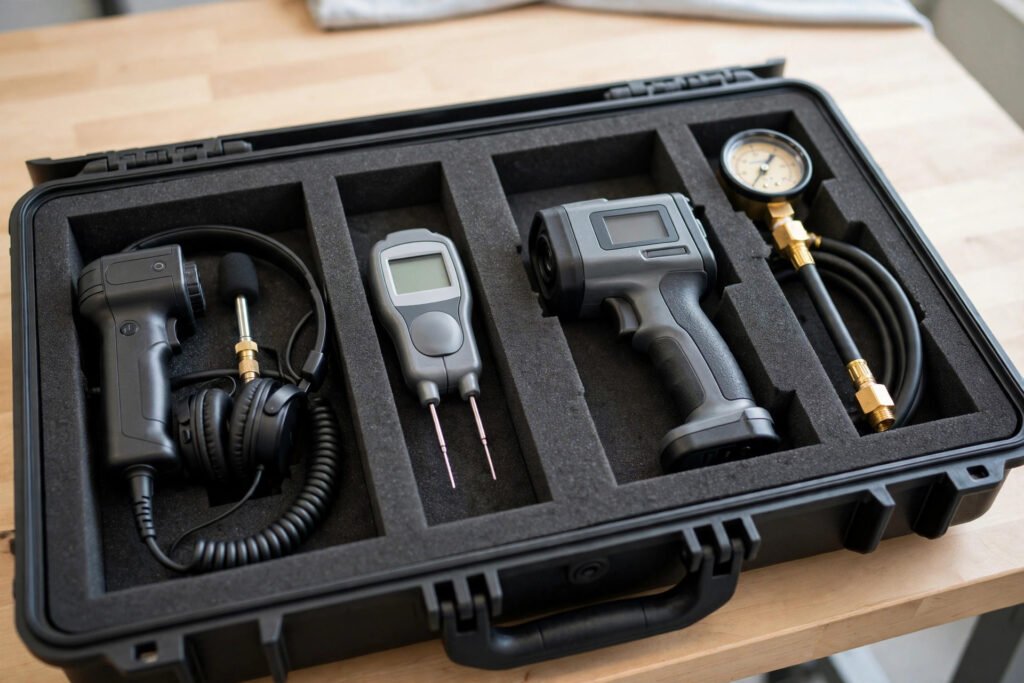
Professional slab leak detection Miami homeowners rely on works by confirming that a leak exists, isolating which line is losing water, and then narrowing down the location on that line before any concrete is opened. The specialist chooses methods based on the type of line, the flooring and what the symptoms suggest.
- 01
Initial Assessment
The specialist asks what you’ve noticed: when the bill changed, where the floor feels warm, whether you hear water, and whether there have been past leaks or repairs. They may review recent bills and the layout of the home, including where the water heater, bathrooms and kitchen sit.
- 02
Confirm the Leak
A meter test or pressure test shows whether water is actually escaping from the plumbing. If the meter stays still and the system holds pressure, the problem may be a billing issue, a fixture or something other than a slab leak.
- 03
Isolate the Leaking Line
The specialist separates parts of the system to see which one is losing water. Testing the hot and cold sides separately is a common step. If the meter stops when the hot water side is isolated, the leak is likely on a hot water line. This narrows a whole house of plumbing down to one line or section.
- 04
Narrow Down the Location
With the leaking line identified, the specialist works to pinpoint where along it the leak is. Depending on the situation, this can involve:
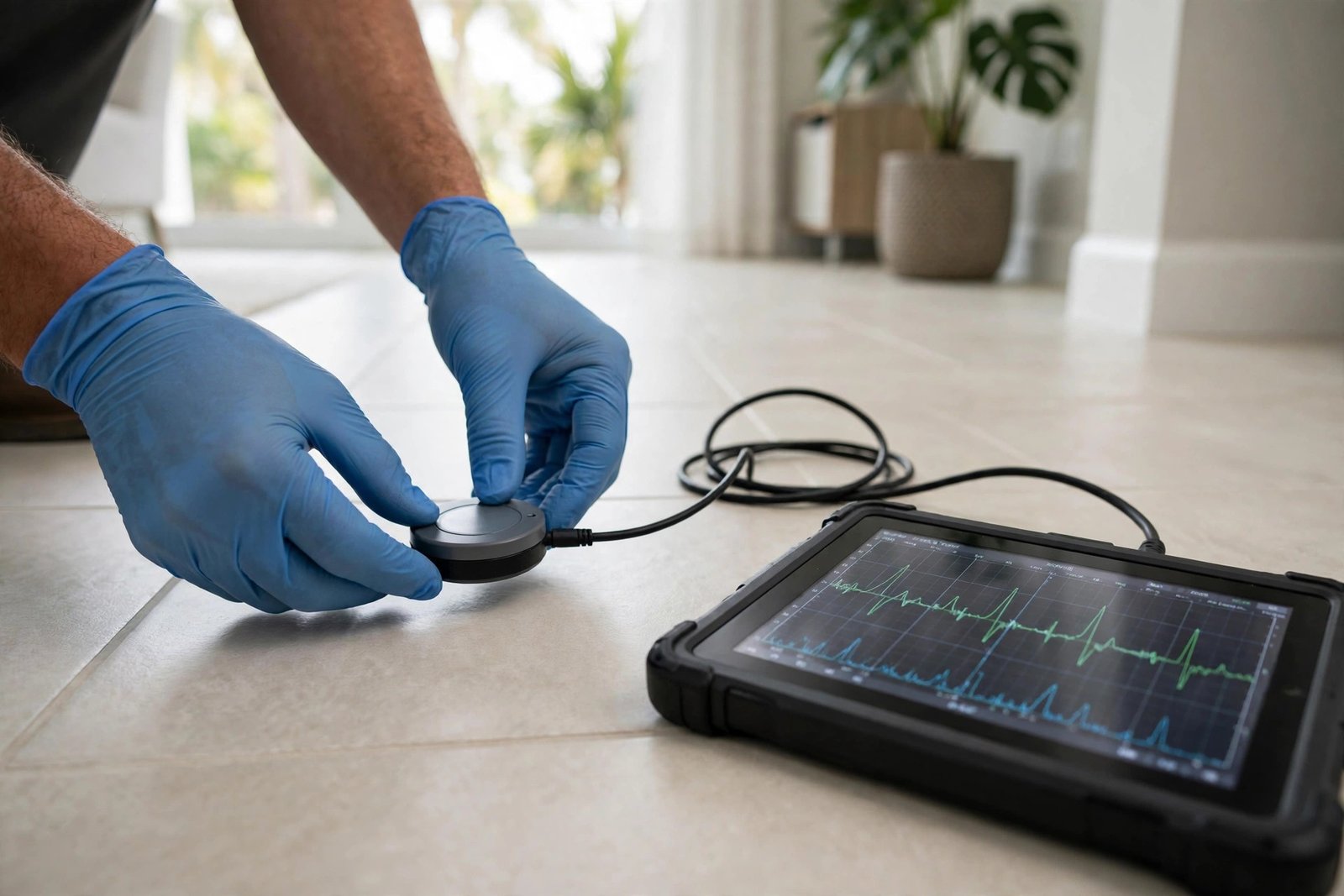
- Acoustic equipment, sensitive listening devices that pick up the sound of water escaping a pressurized pipe through concrete and flooring.
- Thermal imaging, an infrared camera that can show the warm path of a hot water line and where heat spreads from a leak.
- Moisture meters, which measure moisture in flooring, grout and walls to show where water is reaching the surface.
- Line locating, electronic equipment that traces the route of a pipe under the slab so testing happens along the right path.
- Pressure testing, where sections of line are pressurized and monitored to confirm whether they hold.
Not every method is used on every job. Thermal imaging is most useful for hot water lines, and acoustic listening depends on the pipe, the flooring and background noise.
- 05
Explain the Findings
When testing is complete, the specialist explains which line appears to be leaking, the suspected location and what they recommend next. Ask whether written findings or photos are available, since they help with repair planning and with insurance or utility questions.
What to Have Ready Before the Inspection
A few details help the specialist start in the right place:
- Your last few water bills, especially the one that changed
- Where you’ve noticed warm spots, dampness or the sound of water
- What you saw when you watched the meter with all water off
- The approximate age of the home and any past plumbing repairs
- For condos: contact details for building management, and any access rules
Can a Slab Leak Be Found Without Breaking Concrete?
In many cases, yes. The location of a slab leak can often be narrowed down without breaking concrete, because the testing and diagnostic equipment work from the surface. Repairing the pipe is a different step. Reaching a leak under a slab usually means opening the floor at the confirmed spot, unless the repair plan routes a new line around the slab instead.
Some leaks are harder to pinpoint than others. A very small leak, a leak that only happens at certain times, a pipe buried deeper than usual, or thick stone flooring can all make detection more difficult. In those cases a specialist may identify a likely area rather than a single exact point, or recommend additional testing.
The real value of detection is that any opening becomes small and deliberate. Without it, finding a slab leak can mean breaking up flooring in several places until the pipe is found.
Slab Leak Detection Miami: Homes, Condos and Rental Properties
The approach to slab leak detection Miami providers take changes with the type of property. A single-story house, a ground-floor condo and an occupied rental each bring different access, plumbing layouts and people who need to be involved.
Single-Family Homes
Single-story slab homes are found across Miami-Dade, from Miami Lakes to older neighborhoods such as Miami Springs and Miami Shores. In these homes, supply lines often branch under the slab to each bathroom and the kitchen. The age of the house matters, because homes from different building eras may have different pipe materials and layouts. If you know your home’s construction year or any past plumbing work, share it with the specialist.

Condos and Townhomes
Ground-floor condo and townhome units can have plumbing under or within the slab, just like houses. In multi-story buildings, water appearing on a floor may come from your unit’s lines, a neighbor’s lines or a shared building line, so the source isn’t always where the water shows up.
In a condo, slab leak detection Miami providers often need coordination before testing begins:
• The association or building management may need to approve access or any opening.
• Cutting into concrete in a condo building may require the association’s approval first.
• Responsibility for a leak can depend on where the leaking line is and what your association documents say.

Rental and Multi-Unit Properties
Landlords and property managers often learn about a slab leak through a tenant report or a sudden spike on a water bill. Clear findings help you decide on repairs quickly, keep tenants informed, and keep records for insurance or utility purposes. Testing may need to be scheduled around occupied units.
What Is the Difference Between Slab Leak Detection and Slab Leak Repair?
Slab leak detection finds the leaking line and the likely location of the leak. Slab leak repair fixes it. The repair may be handled by the same provider or by a licensed plumber you choose.
Once a leak is located, there is usually more than one way to repair it. Common approaches include:
- A spot repair. The floor is opened at the leak location, the damaged section of pipe is repaired, and the floor is restored.
- Rerouting the line. A new line is run through walls or the ceiling, and the leaking section under the slab is taken out of service.
- Replacing more of the plumbing. If the pipes show multiple leaks or widespread deterioration, replacing a larger section may be discussed.
The right choice depends on the pipe’s condition, its location, the flooring, the age of the plumbing and your budget. No single method fits every slab leak.
Questions to Ask After a Slab Leak Is Found
- Which line is leaking: hot or cold, supply or drain?
- How confident are you in the location, and what is it based on?
- Which repair options make sense here, and what are the trade-offs?
- Is there any sign of other leaks or aging pipe?
- Can I get the findings in writing, with photos?
- Do you also handle repairs, or will I need a separate plumber?
What Affects Slab Leak Detection Miami Costs?
The cost of slab leak detection Miami homeowners pay depends mainly on how much testing it takes to isolate and locate the leak. A hot water leak that shows clearly on a thermal camera may take less time than an intermittent cold water leak under thick tile.
Pricing varies by provider and situation. Before booking, ask for the detection fee, what it includes, and whether any part of it applies toward a repair.
The main factors that affect price:
Hot or cold line.
Hot water leaks can sometimes be traced faster because heat shows up on thermal imaging.
Size and layout of the home.
More fixtures and longer pipe runs mean more ground to cover.
Flooring type.
Thick tile, stone or wood can make acoustic listening harder than bare concrete.
Leak size and behavior.
Very small or intermittent leaks often take longer to locate.
Property type and access.
Condos and occupied rentals may need extra coordination or scheduling.
Methods used.
Some jobs need only a few tools. Others need several.
Documentation.
Written findings with photos may be included or priced separately.
How Does Leak Detection Miami FL Help With Slab Leaks?
Leak Detection Miami FL is a referral service. You describe what you’re seeing, and we connect you with an independent, local leak detection provider in Miami-Dade who performs the inspection. The provider, not Leak Detection Miami FL, carries out the testing and any repair work.
A slab leak is hard to locate by guesswork, and guessing wrong means broken flooring in the wrong place. A dedicated detection visit brings the testing process and equipment needed to isolate the line and narrow down the location first.
Before any work begins, it’s reasonable to ask the provider:
- Whether they hold an active Florida license for the work. You can look up contractor licenses through the Florida Department of Business and Professional Regulation (DBPR).
- Which methods and equipment they plan to use.
- What the detection fee includes, and whether findings are provided in writing.
- Whether they also offer repairs.
No responsible provider can promise that every slab leak will be found without opening a surface. A clear explanation of what was tested and what was found is the standard to expect.
Where Is Slab Leak Detection Miami Service Available?
Leak Detection Miami FL helps property owners find slab leak detection in Miami, Miami Beach, Miami Springs, Miami Lakes, North Miami and Miami Shores.
On the mainland, single-story slab homes are common, including many houses in Miami Lakes and older neighborhoods such as Miami Springs and Miami Shores. In Miami Beach and North Miami, ground-floor condos and townhomes also sit on slabs, and building coordination can be part of the job.
If your neighborhood isn’t listed, contact us to check availability.
Leak Detection in Miami
Serving Miami-Dade County
Slab Leak Detection Miami FAQs
How do I know if I have a slab leak?
The strongest sign is a water meter that keeps moving while all water in the home is off, combined with a symptom near the floor such as a warm spot, damp flooring or the sound of running water. These signs suggest a slab leak but don’t confirm one. Professional testing is needed to identify the leaking line and its location.
Can I find a slab leak myself?
You can check for signs of a leak by watching your water meter with everything turned off and noting any warm or damp areas on the floor. Pinpointing the exact location usually takes specialized equipment such as acoustic listening devices, thermal imaging and line locators.
Is a slab leak an emergency?
Most slab leaks are not instant emergencies, but they should be investigated soon because they waste water continuously and can damage flooring and encourage mold. If water is actively spreading or causing damage, shut off the main valve if it’s safe to do so and get help right away.
What is the difference between a hot and cold water slab leak?
A hot water slab leak often creates a warm spot on the floor and may make the water heater run more often. A cold water slab leak produces no heat, so it’s usually noticed through the water bill, the meter or moisture. The difference also affects which detection methods work best.
Does homeowners insurance cover slab leaks?
It depends on your policy. Insurers may treat the cost of reaching the leak, the pipe repair itself and the resulting water damage differently, and long-running leaks may be handled differently from sudden ones. Review your policy and talk with your insurer or agent before repairs begin.
How long does slab leak detection take?
It depends on the home’s size, the flooring, the type of line and how easily the leak can be heard or seen with equipment. A clear hot water leak may be located faster than a small, intermittent cold water leak. The provider can give a better estimate after hearing your symptoms.
What happens after a slab leak is found?
Once the leak is located, you can discuss repair options such as a spot repair, rerouting the line, or replacing a larger section of pipe. The best option depends on the pipe’s condition, its location and your budget. Ask for the findings in writing so you can compare repair quotes.
Do condos get slab leaks?
Yes. Ground-floor condos and townhomes can have water lines under or within the slab. In multi-story buildings, water on a floor can also come from another unit or a shared line, so condo leaks often need coordination with the association or building management.
Think You Have a Leak Under Your Slab?
If you’re seeing a higher water bill, a moving meter, a warm spot on the floor or moisture with no clear source, slab leak detection Miami testing can show where the problem is before any concrete is opened. Contact Leak Detection Miami FL to connect with a local leak detection professional in Miami-Dade.
Related Leak Detection Resources
Leak Detection Services
Areas We Serve

A Miami-Dade referral service connecting homeowners, condo owners and property managers with independent local leak detection providers.
Call us today(645) 465-5599Call NowServices
Leak Detection Miami FL is a referral service and does not perform inspections or repairs. Services are provided by independent local providers.
© 2026 Leak Detection Miami FL. All rights reserved.